
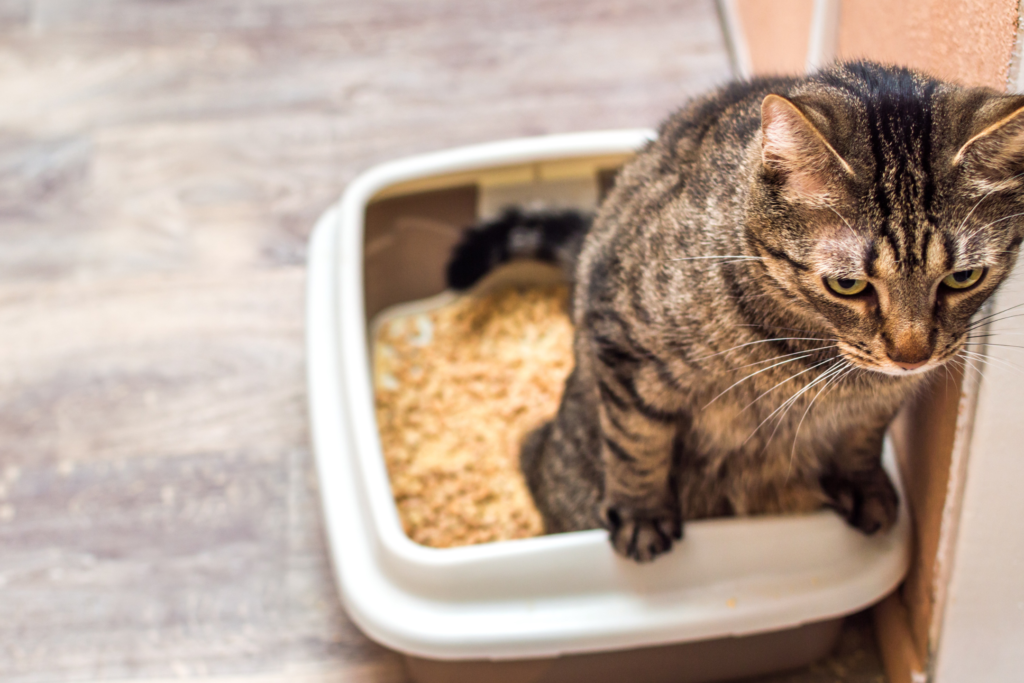
If you’ve ever scrubbed a spot with soap, vinegar, or your regular floor cleaner and the cat pee smell still creeps back a few days later, especially when it’s humid, you’re not doing anything wrong. Regular cleaners genuinely can’t fix this one. Here’s why, and what actually works.
Why Cat Pee Smells So Strong in the First Place
The main culprit is something called uric acid. When cat urine dries, the uric acid forms tiny crystals that bind tightly to whatever surface they’re on, carpet fibres, wood, fabric, grout. These crystals don’t dissolve in water, so they just sit there, sometimes for months. The moment humidity rises or the spot gets a little damp again, the crystals reactivate and release that sharp smell all over again.
This is exactly why a spot can seem completely clean and odour-free one day, and smell just as bad again a few days later. You didn’t fail at cleaning it, the crystals were just waiting it out.
Why Regular Cleaners Don’t Actually Work
Soap, vinegar, baking soda, and regular detergents can clean up the surface mess and the smell you notice immediately, but none of them are able to break down uric acid crystals. So the underlying cause is left behind. A few things worth knowing here:
- Bleach isn’t a good idea near cat urine. It can react with the ammonia in the urine and produce a gas that’s genuinely harmful to breathe in.
- Ammonia-based cleaners can backfire. Cat urine already contains ammonia-like compounds, so cleaning with an ammonia-based product can actually smell similar enough to urine that it encourages your cat to mark the same spot again.
- Vinegar and baking soda help with surface odour but don’t touch the uric acid crystals underneath, so the smell tends to return.
The One Thing That Actually Works: Enzymatic Cleaners
Enzymatic cleaners are the only category of cleaner that can properly break down uric acid. They work using enzymes (proteins that speed up chemical reactions) that latch onto the uric acid crystals and break them into smaller, water-soluble, odourless compounds. Once that happens, the smell is gone for good, not just masked.
We’ve used enzyme-based sprays ourselves and they genuinely make a noticeable difference over regular cleaners, especially on spots that keep coming back no matter how many times you’ve scrubbed them. If you’re dealing with a recurring spot, this is worth trying before anything else.
If you’re looking for one, Amazon is probably your easiest bet, there are plenty of enzymatic cleaner options available there, and they tend to be the most convenient way to get your hands on a good one quickly.
How to Clean a Urine Spot Properly
- Blot, don’t rub. Use a clean cloth or paper towels to soak up as much fresh urine as possible, working from the outside of the stain inward so it doesn’t spread further.
- Find hidden or old stains with a UV flashlight. Cat urine glows under UV light, which is genuinely useful for spotting stains you can’t see or smell yet, especially on carpets and mattresses.
- Saturate the area generously with an enzymatic cleaner. Don’t just spray the surface, the cleaner needs to reach as deep as the urine did, including carpet padding underneath if it’s soaked through.
- Let it sit and air dry. This part matters more than people expect. The enzymes need time, often several hours or overnight, to fully break down the crystals. Wiping it dry too soon cuts the process short.
- Repeat for older or heavily soiled spots. Set-in stains sometimes need a second round.
One Important Note Before You Just Clean and Move On
If your cat has suddenly started peeing outside the litter box, especially if this is new behaviour, more frequent than usual, or your cat seems to be straining, it’s worth getting her checked by a vet before assuming it’s just a habit issue. Painful conditions like urinary tract infections or bladder inflammation are actually the most common reason cats stop using their litter box, and cleaning alone won’t fix the underlying cause if that’s what’s going on.
If your vet rules out a medical cause, then it’s more likely to be a behavioural or stress-related issue, like a litter box that needs cleaning more often, a change at home, or, in the case of unneutered cats, territorial marking.
Preventing It From Happening Again
- Keep the litter box genuinely clean. Cats are far more sensitive to smell than we are, and a box that seems fine to us can already feel unusable to them.
- Have enough litter boxes. A common guideline is one box per cat, plus one extra.
- Spaying or neutering your cat significantly reduces spraying and territorial marking, especially in unneutered males.
- Once a spot has been marked, get to it with an enzymatic cleaner as soon as you can. The longer uric acid sits and dries, the deeper it works into a porous surface like carpet or fabric.
Our Takeaway
Cat pee smell isn’t a stubborn cleaning problem, it’s a chemistry problem, and it needs the right kind of cleaner to actually solve it. Regular soap, vinegar, or baking soda might handle the surface, but only an enzymatic cleaner breaks down the uric acid crystals causing the smell in the first place. Once you’re using the right product and giving it the time it needs to work, this stops being the frustrating, recurring problem it usually feels like.
Frequently Asked Questions
- Why does the smell come back even after I’ve cleaned it? Regular cleaners only address the surface. The uric acid crystals underneath stay behind and reactivate whenever the spot gets humid or damp again. Only an enzymatic cleaner fully breaks these down.
- Is it safe to use bleach on cat urine stains? No. Bleach can react with the ammonia in cat urine and produce a harmful gas. It’s best avoided entirely for this purpose.
- How long should I let the enzymatic cleaner sit? As long as you can, ideally a few hours or even overnight for older stains. The enzymes need time to fully break down the uric acid.
- Can I make my own enzymatic cleaner at home? Not really; the enzymes in commercial cleaners are specifically selected to target uric acid, which household ingredients like vinegar or baking soda can’t replicate. A store-bought enzymatic or bio-enzyme spray is the more reliable option.
- My cat suddenly started peeing outside the litter box, is that just behavioural? Not necessarily. Sudden changes in litter box habits are often linked to a medical issue like a urinary tract infection, so it’s best to get your cat checked by a vet before assuming it’s purely behavioural.
- Does spaying or neutering help with the smell? Yes, it significantly reduces spraying and territorial marking, especially in male cats, which cuts down on how often this becomes a problem in the first place.