
If you’ve read our earlier posts on keeping your cat hydrated and why dry food alone isn’t enough, you already know two things: water matters, and kibble can’t do all the work. The next question every Indian cat parent asks is the obvious one: okay, so what DO I feed my cat, and what’s actually available to me?
The Indian pet food market has grown up fast. A few years ago it was basically kibble or home-cooked rice and fish. Today you’ve got wet food, packaged fresh food, raw diets (with real caveats, more on that below), broths, and a treat aisle that rivals the snack aisle. This guide breaks down every category so you can build a diet that actually works, for your cat and your budget.
Variety Works Better Than a Single Diet
You don’t need to pick one category and stick to it forever. Rotating between wet food, packaged fresh food, home-cooked meals, and the occasional treat keeps things interesting for your cat and protects you if one brand or ingredient suddenly isn’t available. The only non-negotiables are keeping moisture high, protein real, and the basics (taurine, calcium balance) covered, however you choose to mix it.
A quick note before we start: this is general guidance, not a substitute for advice from your own vet, especially if your cat has an existing health condition, is a kitten, or is a senior. When in doubt, ask a professional who’s actually examined your cat.
The Basics
Cats are obligate carnivores. Their bodies run on animal protein, not grains or vegetables as fillers. Whatever combination of the options below you land on, a good diet checks these boxes:
- High protein, animal-based (chicken, fish, eggs, organ meat)
- Moisture-rich, which is why wet, fresh, or raw food matters more than kibble alone
- Taurine, an amino acid cats can’t make themselves; found naturally in meat and fish, and easy to top up with a supplement if you’re unsure your cat’s getting enough
- A sensible calcium-to-phosphorus balance, especially in home-cooked or raw diets
- Minimal carbs, zero onion, garlic, spices, or excess salt
The Indian Market
1. Dry food (kibble)
The most common and convenient option. Long shelf life, easy to portion, generally the most affordable per meal. But it’s low in moisture (as low as 8 to 10% water, compared to a cat’s natural prey which is around 70% water), which is why it shouldn’t be the only thing in the bowl. Good as a base, not as the whole diet.
2. Wet food (cans, pouches, gravy/pate)
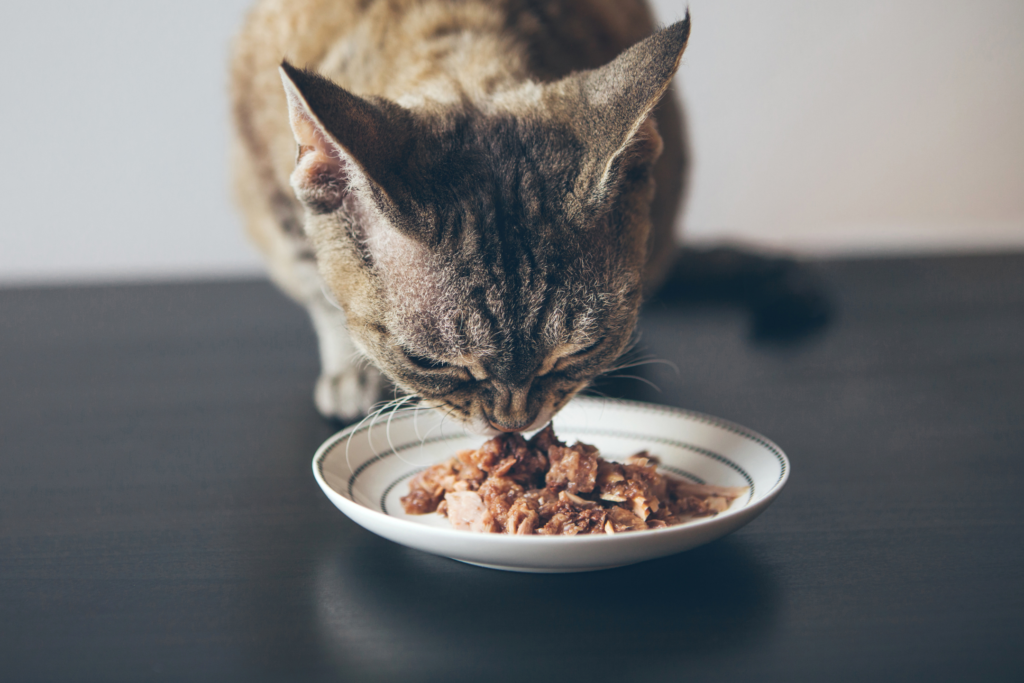
Higher moisture (often 70 to 80%) and usually higher real-meat content than kibble. Great for hydration and palatability, especially for cats that don’t drink much on their own. Slightly more expensive and needs refrigeration once opened, but it’s one of the best everyday upgrades you can make.
3. Packaged fresh / gently cooked food
A newer category in India: human-grade meat, lightly cooked and portioned, usually sold frozen or refrigerated with a shorter shelf life. It sits between home cooking and commercial food, less processed than kibble or canned food, more convenient than cooking yourself. Good option if you want home-cooked quality without the daily prep.
4. Raw feeding, a word of caution
Raw diets (sometimes called BARF) have a global following, but raw feeding in India carries a higher contamination risk (salmonella, E. coli, parasites) given less regulated meat supply chains. Only consider it if you’re 100% certain of your meat source and hygiene, and check with your vet first. Packaged fresh/gently cooked food (below) offers similar appeal without the same risk, since it’s cooked.
5. Broths and bone broth
Not a meal on their own, but a genuinely useful addition. Unsalted, unseasoned meat or bone broth adds moisture, flavour, and a bit of extra nutrition. Many Indian brands now sell shelf-stable cat broths in tetra-pack style pouches. Great for topping up dry food, encouraging a picky eater, or supporting a cat that’s recovering from illness or just not drinking enough water.
6. Supplements
Not a replacement for a balanced diet, but useful for filling specific gaps:
Taurine, since cats can’t produce it themselves and long-term deficiency is linked to heart disease and vision loss. Cats on home-cooked or lean-meat diets are most at risk. Watch for lethargy, weakness, or laboured breathing, and see a vet promptly if these appear.
Omega-3s (fish oil or powder) for skin, coat, joint, and heart health.
Calcium, balanced against phosphorus (roughly 1:1 to 1.3:1), matters most for home-cooked or raw diets where boneless meat runs calcium-poor. Worth confirming with a vet rather than guessing.
Probiotics for gut health after antibiotics or a diet change.
Joint support (glucosamine/chondroitin) for senior cats.
Multivitamins for rescued or street-origin cats recovering from poor nutrition.
Check with your vet before starting supplements if your cat is on medication or has a diagnosed condition.
7. Treats
Treats add up faster than people expect, so it’s worth knowing the sub-categories and which ones to actually be cautious about.
Healthier options:
Freeze-dried meat/fish treats (chicken, anchovy, etc.), single ingredient, minimally processed, high protein. Good for training and bonding without the empty calories of processed treats.
Jerky-style treats, ideally single-ingredient and free of added sugar or preservatives, for meatier, slower snacking.
Lickable/wet treats (purees), often used to hide medication or just as a bonding ritual, best chosen without added thickeners or sugar.
Treats worth being cautious about:
Semi-moist treats that rely on propylene glycol or similar humectants to stay soft. Propylene glycol is banned in cat food in several markets because it can cause Heinz body anemia in cats, a condition where red blood cells are damaged. It’s more commonly a concern in some dog treats accidentally shared with cats, but it’s worth checking labels on any very soft, shelf-stable cat treat too.
Dental treats/chews that lean on corn, wheat, or added sugars to hold their shape. They can help with plaque, but a carb-heavy dental treat is working against the rest of a low-carb diet.
Treats with vague labels like “meat derivatives,” “animal digest,” or a long list of artificial colours and preservatives (BHA, BHT, ethoxyquin). These aren’t acutely dangerous in small amounts, but they add up, and a named single protein source is always the safer default.
The 10% rule applies across all treat types: treats shouldn’t exceed 10% of your cat’s daily caloric intake, no matter how healthy they are.
Making a Balanced Meal at Home
If you want to cook at home instead of relying only on packaged options, the short version is:
- Base: cooked, unseasoned chicken, fish, or organ meat (the bulk of the meal)
- Add: a boiled egg once or twice a week
- Optional filler (small amount only): plain rice or khichdi. This should never be the main component
- Moisture: a splash of water or unsalted broth mixed in
- Fill the gaps: a taurine supplement, since even meat-heavy home meals can fall short, and attention to the calcium-to-phosphorus ratio, which boneless meat alone doesn’t provide
- Skip entirely: onion, garlic, salt, oil, spices, and bones that can splinter
Home-cooked meals can absolutely be part of a healthy diet, but consistently getting the calcium-to-phosphorus ratio and micronutrients right is genuinely hard to do without guidance. This is where supplements, or rotating in some commercial food, help cover the gaps that home cooking alone tends to miss. If you’re feeding home-cooked meals as the primary diet long-term, it’s worth running the recipe past a vet or veterinary nutritionist at least once.
A Note on Kittens Under 2 Months
Kittens younger than 8 weeks shouldn’t be on solid cat food at all. Ideally, they’re still nursing from their mother, which also gives them antibodies they can’t get any other way. If a kitten is orphaned or the mother can’t nurse, the only safe substitute is a kitten milk replacer (KMR), available at most vet clinics and pet stores, fed via bottle on a strict schedule. Cow’s milk is not a safe substitute and can cause diarrhoea and dehydration. Weaning onto wet food or soaked kibble usually starts around 4 weeks, alongside milk replacer, and is fully complete by 8 weeks. If you’ve found an orphaned kitten this young, get in touch with a vet as soon as possible rather than improvising.
Feeding Chart: How Much and How Often
Use this as a general guide, and adjust based on your cat’s activity level, body condition, and vet’s advice.
Life Stage | Age | Meals/Day | Approx. Daily Food | Suggested Mix |
Kitten | 2 to 6 months | 4 meals | 5 to 6% of body weight | Mostly wet/fresh food + soft cooked meat |
Kitten | 6 to 12 months | 3 meals | 4 to 5% of body weight | Wet/fresh food + cooked meat, dry introduced gradually |
Adult | 1 to 7 years | 2 to 3 meals | 2 to 4% of body weight | 70% wet/fresh (or raw, only with a fully trusted source), 30% dry (if any) |
Senior | 7+ years | 2 to 3 smaller meals | 2 to 3% of body weight | Softer, more wet/broth-topped food |
Rule of thumb: an average 4 kg adult indoor cat needs roughly 160 to 200 grams of food a day, split across two meals, with the majority coming from wet, fresh, or cooked protein rather than dry kibble alone.
Foods to Avoid, Regardless of Category
- Onion, garlic, and anything from the masala dabba. Contact your vet or a poison control helpline if you suspect ingestion.
- Milk (most adult cats are lactose intolerant, despite the stereotype)
- Cooked bones that can splinter
- Chocolate, tea, coffee
- Raw dough/yeast
- Excess salt, oil, or seasoning in home-cooked meals
When to Call a Vet
Diet plays a huge role in long-term health, but it’s not a substitute for veterinary care. Get in touch with a vet promptly, and treat it as an emergency where noted, if you notice:
- Straining to urinate, frequent litter box trips with little or no urine, or crying while trying to go. This is especially urgent in male cats, whose narrower urethras make them more prone to a complete blockage, which can become life-threatening within 24 to 48 hours.
- Repeated vomiting, ongoing diarrhoea, or refusal to eat for more than a day.
- Lethargy, laboured breathing, or sudden weakness.
- Any suspected ingestion of onion, garlic, chocolate, or a toxic plant.
None of this is meant to worry you unnecessarily; most cats on a reasonable diet do just fine, but knowing the red flags is as important as knowing what to put in the bowl.
The Takeaway
There’s no single correct way to feed an Indian cat anymore. The market has genuinely caught up, from dry food to gently cooked fresh meals, with raw diets as an option too for those who can vet their meat source carefully. What matters is prioritising real protein and moisture over convenience-only kibble, understanding what each category is actually good for, and using supplements to fill the gaps (taurine, omega-3s, calcium balance) that even good commercial or home-cooked diets can miss. Mix and match based on your budget, your cat’s preferences, and a bit of trial and error, and your cat will let you know pretty quickly what’s working.