
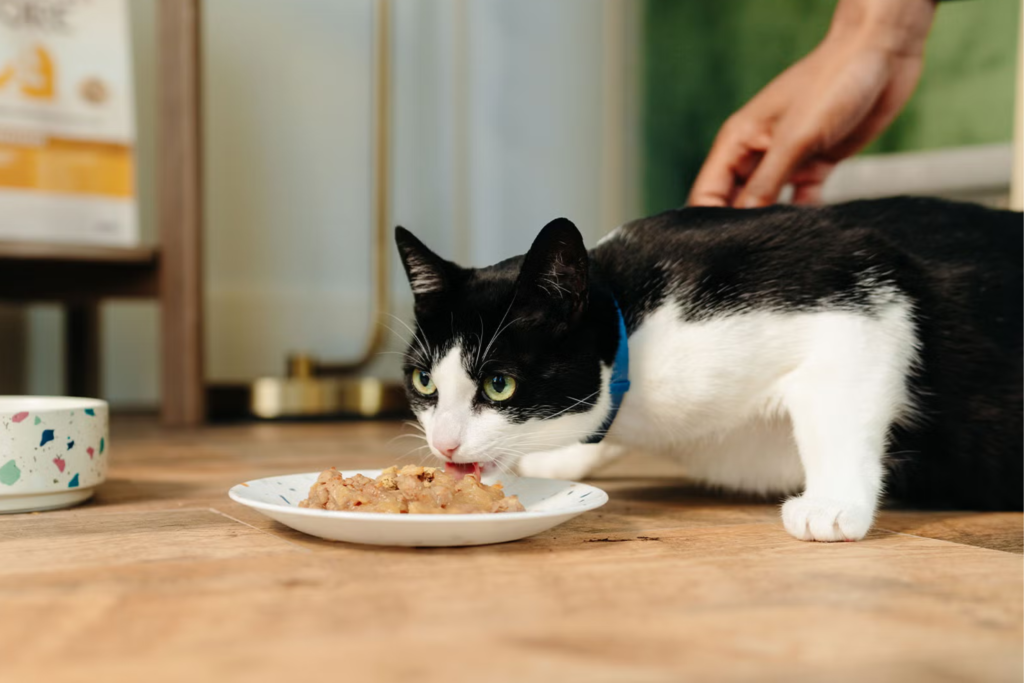
Have you ever picked up a pouch or can of cat food and wondered what “retort” actually means? Most people think of wet cat food as the soft, juicy kind their cats love, not the dry, crunchy kibble.
What makes retort cat food special is how it is cooked and sealed. This method keeps the food fresh, safe, and flavorful for months without artificial preservatives. It heats the food just enough to eliminate harmful microbes while locking in nutrients and taste, so your cat enjoys a wholesome, meaty meal every time.
Retort Process and Packaging Explained
The Retort Process
The retort process is a precise sterilization method used to keep wet pet food safe and shelf-stable. Once the food is sealed inside its final container, such as a pouch, tray, or can, it is placed in a pressurized vessel called a retort.
Inside, the food is heated to around 115°C to 130°C, which kills bacteria and microorganisms, making the food commercially sterile and safe for long-term storage.
Depending on the system, heat is applied using steam, hot water spray, or water immersion to ensure the product cooks evenly. During cooling, controlled pressure prevents containers from deforming.
This technology, used in both human and pet food manufacturing, guarantees food safety, extends shelf life, and helps preserve flavor and nutrients naturally without chemical preservatives.
Retort Packaging
The packaging used for retort cat food must withstand intense heat and pressure while keeping the contents safe and flavorful.
Common types include:
1.Flexible laminated pouches made from multiple layers of materials such as polyester, aluminum foil, and polypropylene. These layers resist heat, block oxygen and moisture, and preserve freshness.
2.Rigid containers such as metal cans or plastic trays that can handle high temperatures and pressure.
Modern retort pouches are lightweight, compact, and easy to open, often featuring tear notches or spouts for convenience. They protect food from air, light, and moisture, helping maintain quality and flavor while extending shelf life.
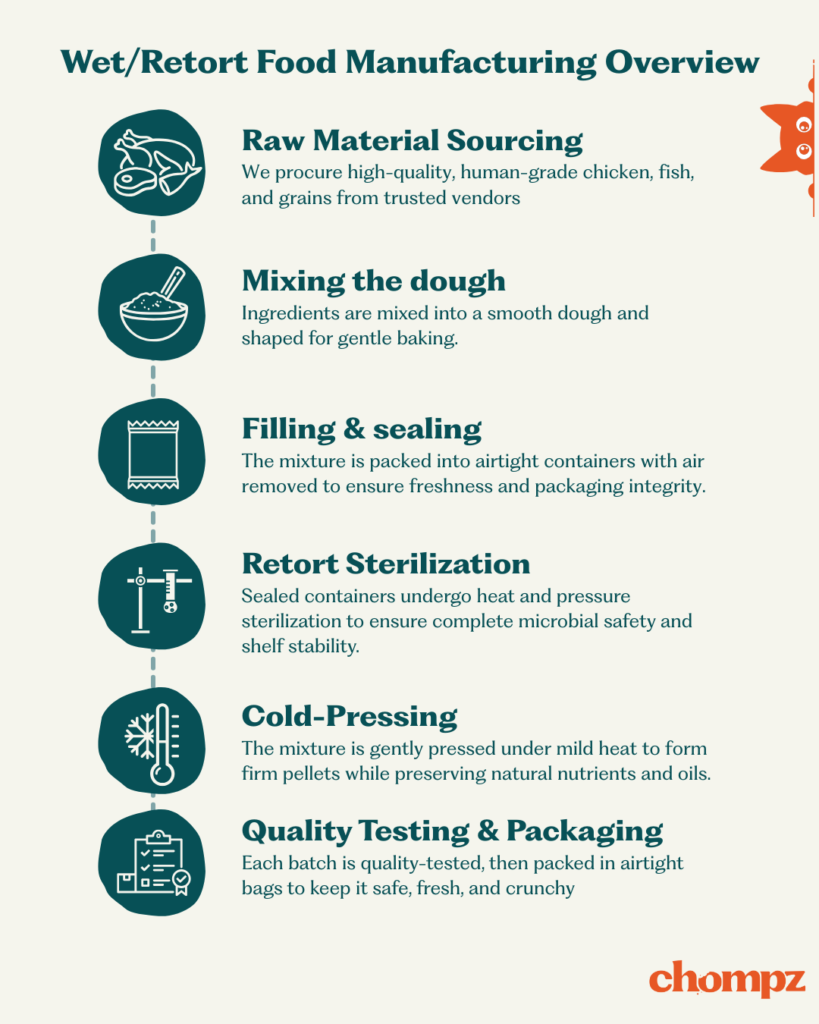
How Retort Cat Food Is Made (Step by Step)
Here’s a simplified look at how canned or pouch cat food is manufactured:
1. Ingredient sourcing & preparation
High-quality meats, fish, vegetables, fats, and supplements are selected, inspected, and ground. Manufacturers often test raw materials for safety and purity before use (e.g. “We work with respected ingredient suppliers and regularly test each raw material”).
2. Mixing / blending
The ground ingredients, liquid components (broth, water), and additives are combined to form a uniform mixture. The consistency is adjusted so it flows well yet holds shape inside cans or pouches.
3. Filling & sealing
The mixture is filled into hermetically sealed containers (cans, pouches, cups). The containers may have partial vacuuming or air removal before sealing to control packaging integrity.
4. Retort sterilization (heat + pressure)
The sealed containers are heated under pressure (steam, water spray, or combined methods) to high temperatures (typical range in many processes: ~120–130 °C) for a duration (10 to 120 minutes or more, depending on product, container, and recipe) to kill microbes and achieve commercial sterility.
5. Cooling & post-processing
After retorting, containers are cooled rapidly (often via water or spray cooling) to stop further cooking and maintain packaging integrity. Sometimes containers are washed and dried post cooling.
6. Quality testing & packaging
Samples from each batch are tested (microbial safety, nutrient content, sensory checks). Only those passing are released. Then containers are labeled, packed into boxes, and shipped.
Why Pet Parents (and Cats) Love Wet Food
Wet food isn’t just delicious for cats. It’s packed with practical benefits too.
- Hydrating and gentle on digestion: With around 70–80% moisture, wet food helps keep your cat hydrated, especially if they don’t drink much water.
- Irresistible taste and texture: Cats love the soft texture and savory aroma that mimics fresh meat.
- Great for picky eaters and seniors: Easy to chew and digest, wet food is perfect for cats with dental issues or sensitive stomachs.
- Naturally preserved: The retort process keeps food safe and fresh without artificial preservatives
Final Thoughts
Wet (retort) cat food is a fantastic choice for cats who love rich flavor and soft textures or for those who need extra hydration in their diet. It’s tasty, easy to digest, and made to stay fresh naturally through sterilization rather than added preservatives.
Whether you choose wet, baked, extruded, or cold-pressed food, the best choice will always depend on your cat’s needs, health, and taste preferences. Look for trusted brands with quality ingredients and balanced nutrition because your cat deserves nothing less than food that keeps them healthy, happy, and purring for more.
Frequently Asked Questions (FAQ) About Retort Wet Cat Food
1. Does retort processing affect the nutrients in cat food?
Some heat-sensitive vitamins (like certain B vitamins) can degrade slightly during sterilization, but reputable pet food manufacturers compensate by adding nutrients back after processing or adjusting their recipes to maintain balance.
2. Do I need to refrigerate retort cat food?
Only after opening. Sealed pouches or cans can be stored at room temperature because the sterilization process and airtight packaging keep them safe. Once opened, store any leftovers in the refrigerator and discard unused portions after two days.
3. Is wet cat food better than dry food?
Both have benefits. Wet (retort) food provides better hydration, a softer texture, and higher palatability, making it ideal for picky eaters or older cats. Dry food, on the other hand, is convenient and helps with dental maintenance. Many pet parents choose to mix both to balance convenience and nutrition.
4. Can kittens eat retort wet food?
Absolutely. Wet food is excellent for kittens because it’s easy to chew, digest, and provides essential hydration. Look for formulas specifically labeled for kittens, as these contain the extra protein, fat, and nutrients needed for growth and development.
5. Why do cats love wet food so much?
Cats are natural carnivores with a strong preference for soft textures and rich meat aromas. Wet food closely mimics the taste, smell, and mouthfeel of real prey, which is why most cats find it more appealing than dry kibble.