
If you’re a cat owner, you’ve probably seen “taurine” listed on your cat’s food label. But what exactly is taurine for cats, and why is this amino acid so critical for your feline friend’s health?
What Is Taurine?
Taurine is an amino acid that most animals, including dogs and humans, can produce on their own. Cats, however, cannot. They must get it entirely from their diet, making taurine an essential nutrient for cats.
Why Do Cats Need Taurine?
Before we get into what taurine does, it helps to understand why cats can’t make it on their own. Most animals produce taurine using two other amino acids methionine and cysteine with the help of special enzymes.
Cats have very low levels of these enzymes, so they simply can’t convert those amino acids into taurine efficiently. On top of that, cats also lose taurine faster than other animals because their bodies use it to digest fats. This double challenge of low production and high loss means cats must rely entirely on their food to stay topped up.
Because cats cannot produce taurine, understanding its role is crucial. Taurine deficiency can lead to serious, often irreversible health problems:
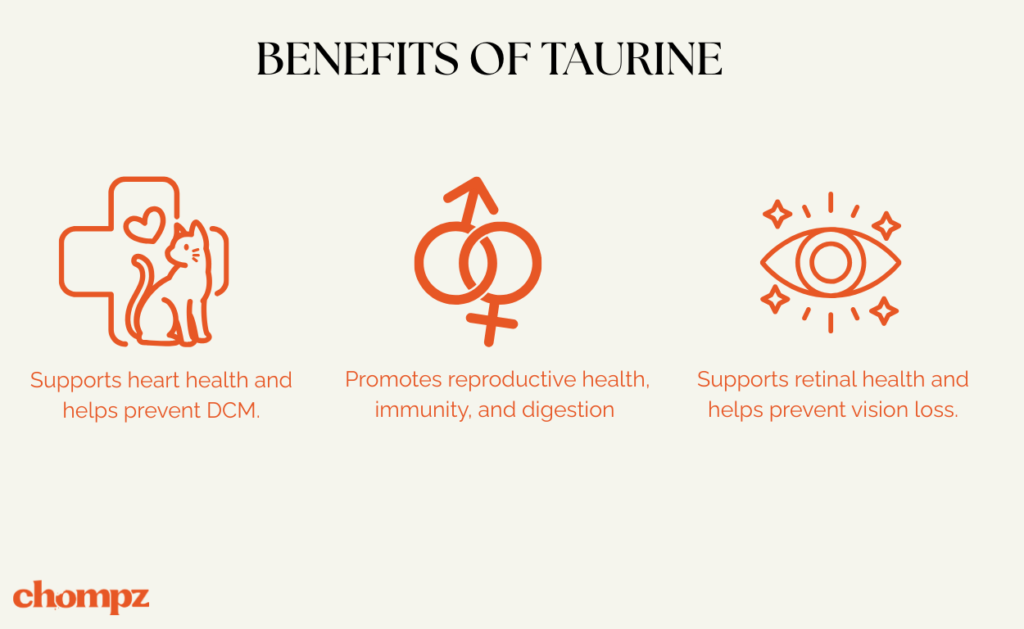
Prevents Heart Disease: Without adequate taurine, cats develop dilated cardiomyopathy (DCM), where the heart weakens and enlarges. DCM can be fatal if untreated, but early taurine supplementation can often reverse the damage.
Protects Vision: When taurine levels drop, retinal cells degenerate, causing feline central retinal degeneration (FCRD). Vision loss from taurine deficiency is permanent, making prevention critical.
Supports Reproduction and Immunity: Pregnant cats need high taurine levels to prevent developmental issues in kittens. Taurine also supports immune function and proper digestion.
Signs of Taurine Deficiency in Cats
Taurine deficiency develops slowly, often taking months or years before symptoms appear. Common warning signs include:
- Vision problems, night blindness, or bumping into objects
- Lethargy, weakness, or reduced activity
- Difficulty breathing or rapid breathing
- Poor coat quality
If you notice any of these symptoms, schedule a veterinary appointment immediately for blood testing and treatment recommendations.
How to Make Sure Your Cat Gets Enough Taurine?
Since ingredient labels are difficult to verify without a laboratory amino acid profile, the most reliable way to ensure your cat’s needs are met is through taurine supplementation.
Because taurine is water-soluble, any excess is safely excreted by the body, making it a low-risk “safety net” for both commercial and homemade diets. If you choose a homemade diet, always consult a veterinary nutritionist to ensure the base recipe is properly balanced.
How Much Taurine Does My Cat Need?
Most adult cats require between 200 to 400 mg of taurine daily, though individual needs may vary based on size, age, and health status.
Recommended Dosage by Life Stage
Always introduce new supplements gradually to avoid further stomach upset.
Age | Quantity |
Kittens(< 1 year) | ½ scoop (0.5 g) |
Adult Cats | 1 scoop (1g) |
(Please note:1g =1000mg)
Understanding Industry Standards
The Association of American Feed Control Officials (AAFCO) has set the following minimum standards for commercial cat food:
- Dry cat food (kibble) must contain at least 0.1% taurine
- Wet cat food (canned) must contain at least 0.2% taurine
The higher requirement for wet food accounts for taurine loss during the canning process.
Pro tip: Standard AAFCO-approved diets already provide enough taurine, so extra supplements are usually unnecessary. Only add them if your vet diagnoses a specific deficiency, and always consult a professional first to ensure safe, accurate dosing.
Are Taurine Supplements Safe for Cats?
Yes, taurine supplements are safe. Taurine is water-soluble, so excess amounts are eliminated through urine. Always consult your veterinarian first, choose cat-specific products, and avoid unnecessary supplementation if your cat eats AAFCO-compliant food.
Our Takeaway
Taurine is a non-negotiable part of your cat’s diet. Because their bodies can’t produce it, they rely completely on you to provide it through food. Sticking to a quality, AAFCO-approved cat food is the simplest way to keep your kitty’s heart, eyes, and overall health in great shape.
When in doubt, your vet is always your best resource for nutrition advice tailored to your cat’s specific needs.
Below is an FAQ section exploring further insights about taurine.
Frequently Asked Questions (FAQs)
1. What foods are high in taurine for cats?
Animal-based proteins like raw meat, organ meats (especially heart and liver), seafood, and shellfish.
2. Can cats get taurine from plants or vegetables?
No, taurine is found exclusively in animal tissue, which is why cats are obligate carnivores.
3. Do kittens need more taurine than adult cats?
Yes, growing kittens require higher taurine levels for proper development of their heart, eyes, brain, and immune system.
4.Can I give my cat human taurine supplements?
Not recommended without veterinary approval. Always use cat-specific taurine supplements formulated for feline safety.