
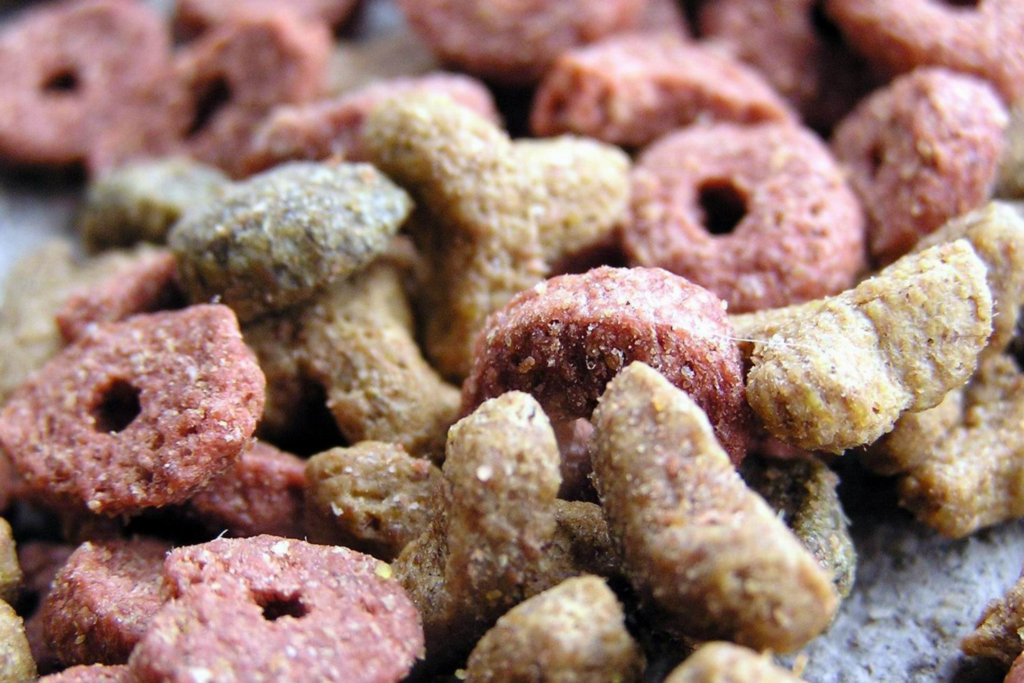
Ever wondered how most dry cat food is made? Chances are, it’s through something called extrusion. Basically, it’s a process that uses heat, pressure, and a bit of clever engineering to turn raw ingredients into those perfectly shaped, crunchy kibbles your cat loves. Think of it like pushing dough through a cookie press with a lot more science behind it.
It’s a popular method because it keeps the food consistent, easy to store, and full of balanced nutrition. It also helps every bag stay fresh and tasty for longer, which means happier cats and cat parents.
Step-by-Step: How Extruded cat food Is Made?
.
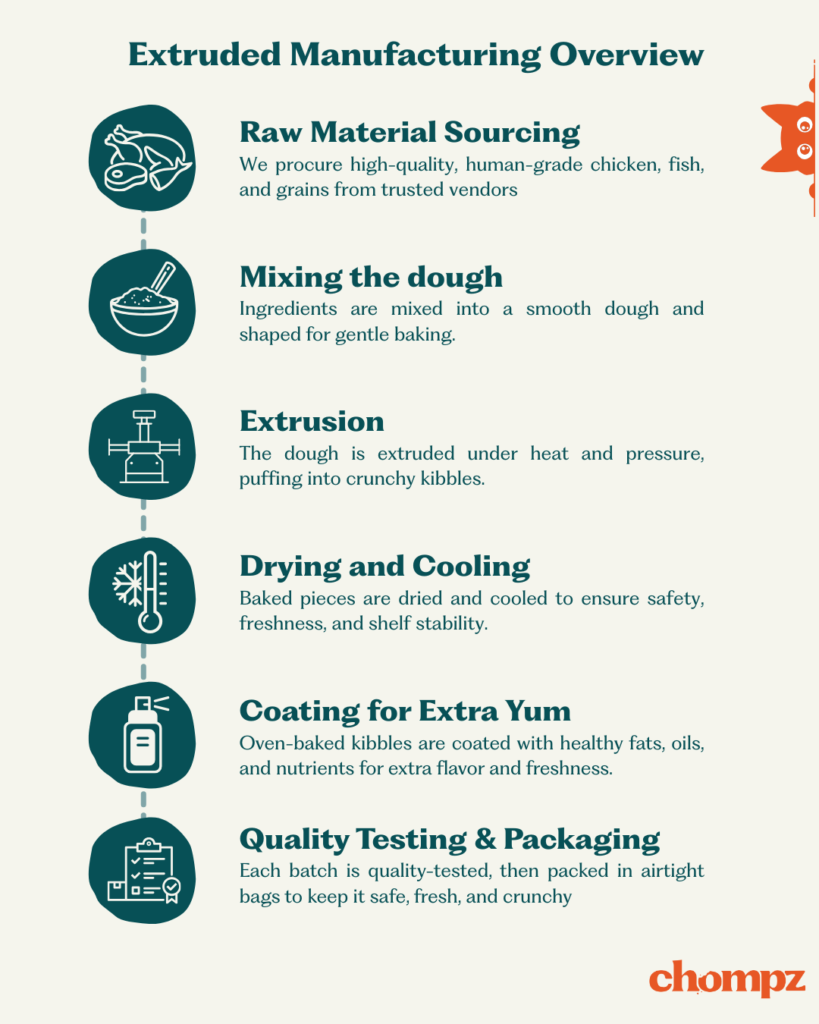
1. Ingredient Preparation
In kibble production, every ingredient such as meat, grains, fats, vitamins, and minerals is finely ground and standardized before mixing. This grinding step ensures uniform particle size, which leads to even hydration, better cooking, and consistent texture.
2. Mixing and Preconditioning
In the mixing and preconditioning stage, finely ground ingredients are blended with water, steam, and fats to form a soft, uniform dough. Steam gently heats the mix, starting starch gelatinization and protein denaturation for better digestibility. This step ensures even moisture distribution, smooth extrusion, and consistent kibble quality.
3. Extrusion (The Magic Step)
The dough is cooked under high heat and pressure inside an extruder, a machine that cooks and shapes it simultaneously. Temperatures typically range from 120 °C to 150 °C (250 °F to 300 °F), with pressures around 20–80 bar (290–1,160 psi).As the hot dough is pushed through a die and exposed to air, it rapidly expands and puffs up, creating the familiar crunchy kibble texture. The pieces are then cut, dried, and coated with flavors and nutrients
4. Drying and Cooling
After extrusion, the kibble is gently dried using hot-air or convection dryers to remove excess moisture and prevent mold, keeping it shelf-stable.Specialized equipment like conveyor or fluid-bed dryers ensures even drying. The kibble is then cooled in vertical or horizontal coolers, where fans circulate air to remove residual heat and maintain crispness before packaging.
5. Coating and Flavoring
In the final stage of kibble production, pieces are tumbled with fats, natural flavors, and nutrients to enhance taste, aroma, and nutrition. Fats add richness and essential fatty acids, while natural palatants like meat or liver extracts make the kibble especially appealing to cats. This uniform coating boosts palatability, making the kibble irresistible.
6. Quality Testing and Packaging
Each kibble batch is tested for safety, nutrition, and moisture to ensure quality and consistency. Once approved, it’s sealed in airtight bags that protect against moisture and oxygen, locking in freshness and flavor until it reaches pets.
Why Pet Parents (and Cats) Love Kibble
It’s easy to see why kibble has been a favorite for so long. It’s simple, satisfying, and gives your cat everything they need in each crunchy bite. For many cats, it’s more than just food .It’s comfort in every mouthful. Here’s why both cats and their humans love it:
Crunchy and convenient: That satisfying crunch helps keep teeth clean by gently scraping away plaque as your cat chews.
Balanced and consistent: Every piece has the same nutrients, ensuring complete and balanced nutrition in every bite.
Long-lasting freshness: Careful drying and airtight packaging help kibble stay fresh and flavorful for months.
Easy to serve and store: Perfect for busy cat parents who want to keep mealtime simple without compromising on quality.
Of course, not all kibbles are the same .The real difference comes from the ingredients, how it’s made, and the care a brand puts into every batch.
Extruded Cat Food: Transition Guide
Days 1-2: Feed 75% old food and 25% new food.
Days 3-4: Change to a 50%-50% mix.
Days 5-6: Feed 75% new food and 25% old food.
Day 7: By now, most cats are comfortably adjusted and can fully enjoy their kibble on their own.
Extruded vs Baked vs Cold-Pressed Cat Food
Choosing the right dry food for your cat can feel tricky with so many options on the shelf. Each type is made differently, which affects how it tastes, how easy it is to digest, and how much nutrition your cat actually gets from it. To make it easier, here’s a simple breakdown of the three most common kinds : extruded, baked, and cold-pressed cat food.
Features | Oven Baked | Extruded(Kibble) | Cold-Pressed |
Cooking Temperature | Gently baked at 150–200 °C (300–400 °F) to preserve flavor and nutrients. | Cooked under high heat and pressure, usually around 120–150 °C (250–300 °F). | Made at low temperatures below 70 °C (158 °F), then dried slowly to protect nutrients. |
How It’s Made | Ingredients are mixed into dough, shaped, slowly baked, tested, coated, and sealed for freshness. | The mix is cooked under high pressure, then extruded, dried, and coated with flavor. | Ingredients are gently mixed and pressed without extreme heat for a more natural finish. |
Texture | Dense and crunchy, similar to homemade biscuits. | Light and crispy, with that familiar airy kibble texture | Soft and crumbly, closer to a natural, less processed feel. |
Digestibility | Easy on the stomach, great for sensitive cats. | Good overall, though some cats may experience mild bloating. | Highly digestible, thanks to gentle processing. |
Costing | Higher : takes longer to bake and uses better-quality ingredients. | Most affordable : mass production makes it cost-effective. | Generally the most expensive : the specialized, low-heat process costs more to produce. |
Our Final Thoughts
Extruded cat food is the most trusted and proven way to make dry cat food, offering safe, consistent, and balanced nutrition when made with quality ingredients. What truly counts is the recipe: choose complete, balanced meals from reputable brands that use wholesome ingredients and pass your cat’s taste test..