
If you’ve ever read through the cat food ingredient list and noticed “poultry by-product meal” or “chicken by-product” or “animal derivatives” in the ingredient list, you might have paused & wondered “Is this good or bad? Should my cat even eat this?”.
The phrase “by-product” sounds unappetizing, but it’s one of the most misunderstood ingredients in pet food.
In this post, we’ll look at what by-products really are, understand more about why they’re used and separate the myths from the facts so that the next time you pick up pet food, you can choose what you think is the best for your pet.
Oh, and animal by-products are different from animal meal. If you would like to learn more about animal meal, visit this (and link animal meal page here)
What Are Animal By-Products?
Animal by-products are the non-muscle parts of animals such as organs, bones, tissues and fats. For example, chicken by-products will be liver, heart, gizzard, kidneys, neck, feet, feathers etc.
Hence any part of the animal that is not consumed by humans & non-muscle parts are by-products.
Below is the overview of the most commonly used by-products in pet food:
| Ingredient Category | General Inclusions |
| Chicken By-Products | Organs (heart, liver, gizzard), heads, feet, undeveloped eggs, feathers, and clean flesh not fit as meat. |
| Poultry By-Products | Organs (liver, heart), necks, feet, heads, undeveloped eggs; may include chicken, turkey, duck sources. |
| Fish By-Products | Fish heads, frames (bones with some meat), scales, fins, tails, viscera (guts), but not exclusive fish meat. |
| Animal Derivatives | Any rendered animal parts (meat meal, bone meal, blood meal), various organs, tissue, and by-products from permitted species. |
Why Are Animal By-Products Used in Cat Food?
Cats are obligate carnivores & so they naturally consume more than just muscle meat in the wild. Organs and connective tissues supply taurine, iron, zinc, and B vitamins that muscle meat alone can’t provide.
Manufacturers use by-products to:
- Enhance nutrition: Organ meats are nutrient dense.
- Reduce waste: They utilize parts of the animal that humans don’t typically eat.
- Control costs: By-products make cat food more affordable as they utilize the whole animal for making food.
When sourced and processed properly, by-products are not “fillers” but a natural part of a cat’s diet.
The Good and the Bad of By-Products
| Pros | Cons |
| Organs like the liver and heart are great sources for vitamins, minerals, and amino acids. | Not all by-products are equal in benefits and include low-quality parts like bones or feathers that are hard to digest. |
| Cats find these ingredients tasty due to their natural flavor and aroma. | Labels are vague & don’t specify which animal parts or species are used. Sometimes dead animals from farms are included |
| Support sustainability by making use of parts of animals that would otherwise be wasted. | Some by-products might cause allergies or sensitivities in certain cats |
Hence, the biggest problem with by-products is actually the manufacturer’s vagueness in specifying what all parts are involved in making the by-product.
How to identify if your cat food has by-products?
They will be visible in either of these 2 ways:
- Writing “by-products” clearly: The label will have the word derivatives or by-products that indicate its inclusion in the food.
Example:

2. Splitting the ingredients: The label will have multiple chicken parts listed separately to make it seem different.
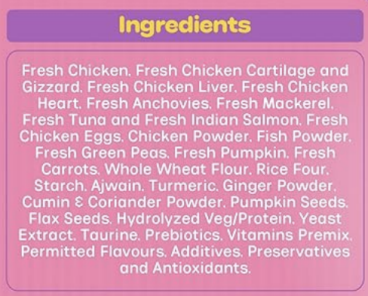
So how to pick the right food for your cat ?
Avoiding food completely that contains by-products is not the best option as it takes away the parts of an animal that your cat would consume in the wild and also shoots up your feeding costs that might not necessarily benefit your cat.
What you can do is look for products that clearly specify what they are using.
For example:
Pick up that has clear info such as “Chicken by-product meal” or “Chicken meal” over “Animal by-product”.
Named species will always provide better quality and traceability.
Our Takeaway
Not all by-products are bad. In fact, they’re often what makes cat food complete and balanced. What matters is transparency of the brand you purchase from. Hence, if your instincts say to trust the transparency & your cat does well with the food, pick that up!
Curious about other common cat-food ingredients?
Next up in our Inside the Bowl series: “What Is Chicken Meal and Is It Better than by-products?”