
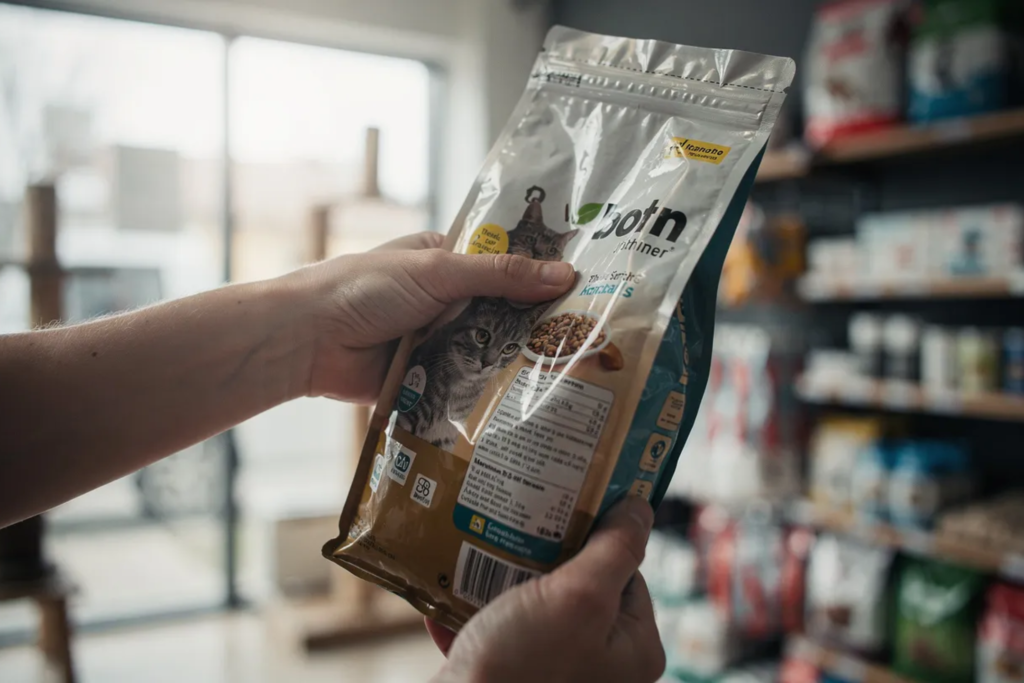
Choosing food for your cat or kitten can feel confusing due to complex terms, long ingredient lists, and vague marketing claims. By focusing on a few essential parts of the label, you can confidently choose a nutritious and complete diet.
Start With the AAFCO Nutritional Statement
The AAFCO (Association of American Feed Control Officials) nutritional adequacy statement is the most important part of any pet food label. It confirms whether the food is “complete and balanced” and appropriate for your cat’s life stage.
Look for one of the following:
“Complete and balanced for growth” (kittens)
“Complete and balanced for adult maintenance”
“Complete and balanced for all life stages”
If the label says “for supplemental feeding only” or does not include an AAFCO statement, the food is not a complete diet and should not be fed as the main meal.
Read the Ingredient List: Focus on the First Few Ingredients
Ingredients are listed by weight before cooking, so the first three to five ingredients reveal the food’s primary composition. Cats are obligate carnivores, meaning animal protein should dominate their diet.
Good signs include:
- Named animal proteins such as chicken, turkey, fish, or lamb
- Meat meals (e.g., chicken meal or fish meal), which are concentrated protein sources
- Simple, recognizable ingredients
Red flags include:
- Vague terms like “meat” or unspecified by-products
- Corn, wheat, or other carbohydrates listed as the first ingredient
- Artificial colors or unnecessary flavorings
Tip: If carbohydrates dominate the top three ingredients, the food is generally not ideal for cats.
Ingredients to Avoid Completely
Certain ingredients provide little nutritional value or may harm your cat’s health:
- Excess salt or sugar: Can contribute to obesity, diabetes, and dehydration
- Artificial colors or preservatives: No nutritional benefit and may cause sensitivities
- Unspecified meat by-products: Often lower-quality protein
- Corn syrup: Linked to weight gain and blood sugar issues
- Melamine: Extremely toxic and dangerous to kidneys
- Feed-grade raw materials: May contain contaminants.
Understand the Guaranteed Analysis
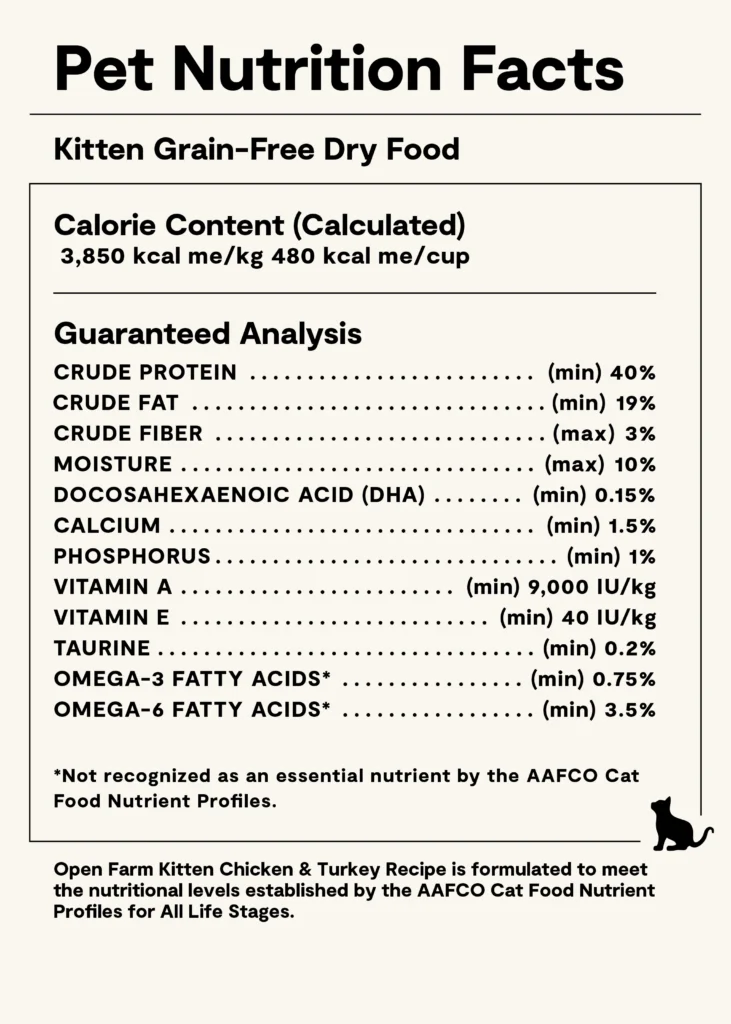
The Guaranteed Analysis shows minimum or maximum nutrient levels. The word “crude” refers to how nutrients are measured, not their quality.
- Crude Protein: Essential for muscle and overall health
- Kittens: 30–35% in dry food
- Adult cats:28–32% in dry food
- Crude Fat: Provides energy and supports skin, coat, and brain development
- Kittens need higher fat levels
- Adults need balanced fat to maintain healthy weight
- Crude Fiber: Supports digestion; ideal range is usually 1–5%
- Moisture: Wet foods contain 70–80% moisture, while dry foods contain about 8–12%. Higher moisture lowers visible nutrient percentages but does not reduce nutritional value.
Helpful extras to look for:
- Taurine for heart and vision health
- Omega-3 and Omega-6 fatty acids for skin, coat, and brain function
- Proper calcium and phosphorus levels for kittens
Understanding percentages on a label is easier when you see real examples. Below are simple comparisons showing what a ‘right’ versus ‘wrong’ label looks like for both dry and wet cat food, based on AAFCO nutritional guidelines.:
Dry Cat Food (Kibble)
|
|
|
First 3 Ingredients |
| Ground corn, Corn gluten meal, Wheat middlings |
Crude Protein | 32% (min) ,exceeds AAFCO adult minimum (26% DMB) | 24% (min) ,below AAFCO minimum |
Crude Fat | 14% (min) , above AAFCO minimum (9% DMB) | 8% (min) , below AAFCO minimum |
Moisture | 10%(max) | 10% (max) |
Protein Source | Primarily animal-based | Primarily plant-based |
Suitable as a Main Diet? | Yes | No |
Wet Cat Food (Canned/Pouch)
|
|
|
First 3 Ingredients | Chicken, Chicken liver, Chicken broth | Water, Soy flour, Corn starch |
Crude Protein | ~9% (min) ≈ 45% DMB | ~7%, below AAFCO DMB minimum |
Crude Fat | ~7% (min) ≈ 27% DMB | ~2% (min) , below AAFCO DMB minimum |
Moisture | ~75% (max) | ~82% (max) |
Protein Source | Animal-based meats and organs | Plant-based fillers |
Suitable as a Main Diet? | Yes | No |
Checking Calorie Content and Feeding Guidelines
Calories are listed as kcal per cup (dry) or per can/pouch (wet). This helps prevent overfeeding.
- Kittens need more calories for growth
- Indoor adult cats typically need fewer calories
Feeding guidelines are estimates. Adjust portions based on your cat’s age, activity level, and body condition.
Marketing Claims vs. Real Information
Terms like “premium,” “holistic,” or “gourmet” are marketing tools with little regulatory meaning. Instead, rely on:
- AAFCO statement
- Ingredient list
- Guaranteed Analysis
- Calorie content
- Clear labelling
Final Thoughts
Ignore flashy claims and focus on factual label information. The AAFCO statement, ingredients, nutrient analysis, and calorie content provide everything you need to choose a healthy, complete diet for your cat or kitten.
If you’d like a deeper look at one of the most important sections on a cat food label, our next guide, “Guaranteed Analysis Explained: Understanding Dry and Wet Cat Food Labels” breaks down the Guaranteed Analysis in detail and explains each component thoroughly.