
If you’ve ever wondered what makes baked cat food different from regular kibble, you’re not alone. Many cat parents are now looking for food that’s gentle on the stomach and closer to real cooking that retains nutrients naturally. Baked cat food has become a popular choice because it’s made using lower temperatures that help preserve flavor and nutrition, just like how baked foods for humans keep their taste and goodness without losing essential nutrients. Think of it as the slow-cooked version of cat kibble that’s wholesome, aromatic, and deliciously satisfying for your furry friend.
But how exactly is baked cat food made, and is it really better for your cat? Let’s find out!
Process of Baking Cat Food
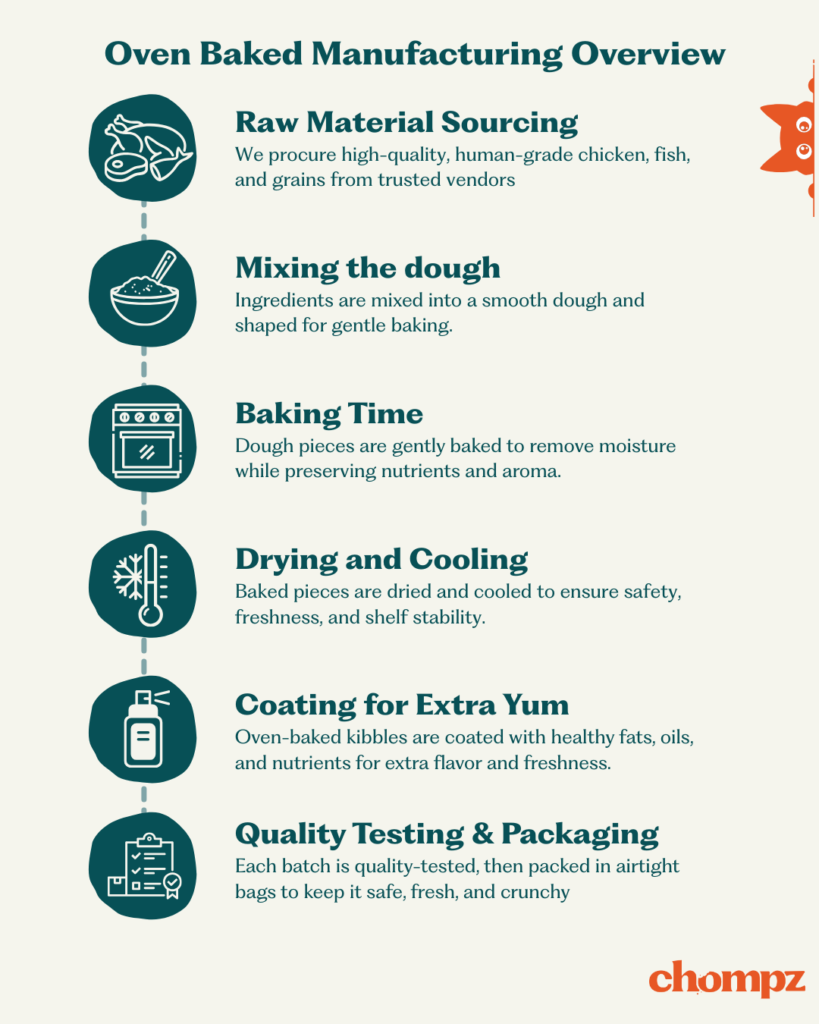
1. Raw Material Sourcing
It starts with premium ingredients like chicken, fish, eggs, and grains sourced from trusted suppliers. Each ingredient is carefully checked and milled for even mixing, ensuring every bite delivers real nutrition and great taste for your cat.
2. Mixing the Dough
All ingredients are blended with water or broth to form a smooth dough. Along with proteins, the mix includes rice or wheat flour, grains, fats, and natural binders. It’s mixed in a planetary mixer, then shaped by cold pressing or rolled and cut through pellet dies into biscuit-like pieces for gentle baking.
3. Baking Time
The dough pieces are baked at lower temperatures, around 175 °F (80 °C), compared to human biscuits baked at 350 °F (177 °C) for about 13 minutes. This slower, gentler process removes moisture while preserving nutrients and natural aroma.
4. Drying and Cooling
Once baked, the pieces still hold some moisture. They’re placed on drying racks and go through a controlled drying phase to reduce moisture to safe levels, preventing mold and ensuring shelf stability. After drying, the pieces are cooled before moving to the next step.
5. Quality Testing
Before packaging, every batch goes through careful quality testing to ensure it’s safe, nutritious, and consistent. Using tools like moisture analyzers and spectrophotometers, experts check for moisture, nutrient balance, and any contaminants. Only the batches that pass all tests move forward, ensuring your cat’s food is both delicious and completely safe.
6. Coating for Extra Yum
To make the food tastier and more nutritious, it’s coated with a blend of healthy fats, oils, and natural flavors. This is also when important vitamins and minerals are added back in. Ingredients like chicken fat or fish oil with antioxidants not only make it irresistible to cats but also help keep the food fresh and flavorful for longer.
7. Sealing It Up
Finally, the baked kibbles are packed in airtight, moisture-resistant bags to stay fresh and crunchy until your cat’s next meal.
Why Some Pet Parents Love Baked Cat Food?
- Baked cat food is often praised for its gentle cooking process, which helps preserve more natural nutrients and flavors.
- The slower bake may also make the kibble denser, meaning you can often feed smaller portions compared to puffier extruded kibble.
- Many owners also find that cats love the richer aroma that comes with baked food.
However, it’s important to remember that baked doesn’t always mean “better.” Quality still depends on the recipe, the ingredients, and the brand’s manufacturing standards. Always look for complete and balanced foods that meet AAFCO or similar nutritional standards.
How to Transition to Oven-Baked Cat food
To transition your cat to oven-baked food, gradually mix the new food with the old over 7–10 days, starting with 25% new food and 75% old, and slowly increasing the ratio of new food until you are feeding 100% of the new food by the final day.
Baked vs Extruded vs Cold-Pressed Cat Food
Choosing the right dry food for your cat can feel like a bit of a puzzle, especially with so many types out there. Each method of making cat food changes how it tastes, how easy it is to digest, and how much nutrition stays in every bite. To make things simpler, here’s a quick, easy-to-understand comparison of the three most popular types — baked, extruded, and cold-pressed cat food.
Features | Oven Baked | Extruded(Kibble) | Cold-Pressed |
Cooking Temperature | Gently baked at 150–200 °C (300–400 °F) to preserve flavor and nutrients. | Cooked under high heat and pressure, usually around 120–150 °C (250–300 °F). | Made at low temperatures below 70 °C (158 °F), then dried slowly to protect nutrients. |
How It’s Made | Ingredients are mixed into dough, shaped, slowly baked, tested, coated, and sealed for freshness. | The mix is cooked under high pressure, then extruded, dried, and coated with flavor. | Ingredients are gently mixed and pressed without extreme heat for a more natural finish. |
Texture | Dense and crunchy, similar to homemade biscuits. | Light and crispy, with that familiar airy kibble texture | Soft and crumbly, closer to a natural, less processed feel. |
Digestibility | Easy on the stomach, great for sensitive cats. | Good overall, though some cats may experience mild bloating. | Highly digestible, thanks to gentle processing. |
Costing | Higher : takes longer to bake and uses better-quality ingredients. | Most affordable : mass production makes it cost-effective. | Generally the most expensive : the specialized, low-heat process costs more to produce. |
The Bottom Line
Baked cat food offers a nice middle ground for pet parents who want something more natural but still convenient. Its gentle cooking process helps retain nutrients and creates a hearty texture that many cats enjoy.
However, the best food for your cat isn’t just about how it’s made, -it’s about what’s inside. Whether you choose baked, extruded, or cold-pressed, look for high-quality proteins, balanced nutrition, and a brand you trust. And of course, the final judge will always be your cat’s nose and taste buds.