
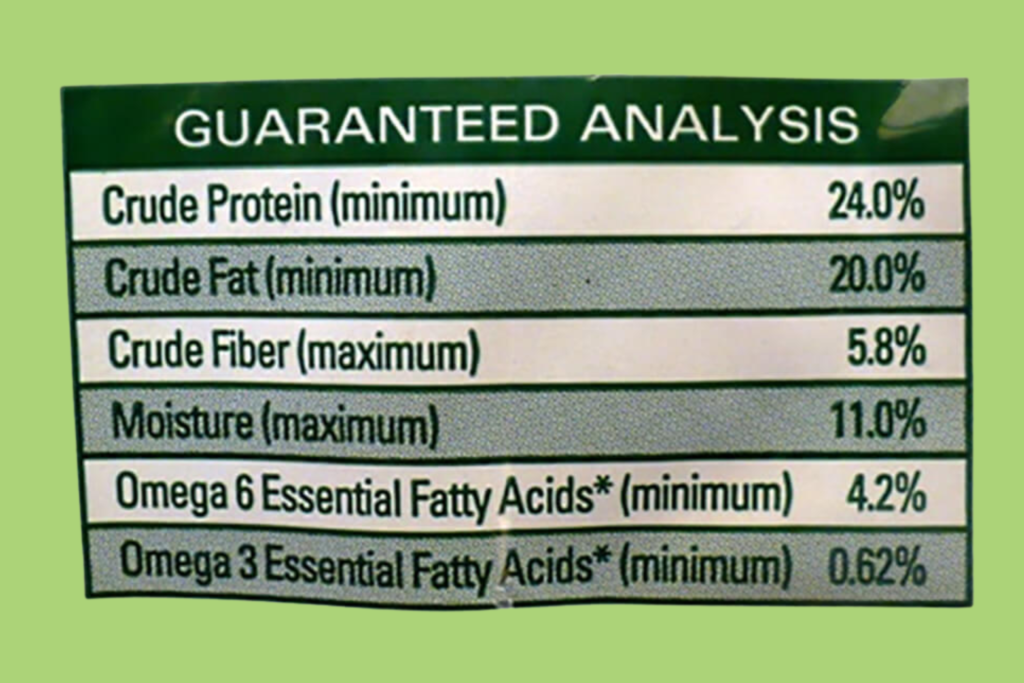
If you’ve ever looked at a cat food label and wondered what all those percentages mean, you’re not alone. The Guaranteed Analysis is one of the most important and often misunderstood parts of the label. Using AAFCO guidelines as a reference, here’s a simple way to understand what those numbers really tell you about your cat’s food.
What Is the Guaranteed Analysis?
The Guaranteed Analysis lists the minimum or maximum amounts of key nutrients found in cat food, usually including crude protein, crude fat, crude fiber, and moisture. The word “crude” refers to how these nutrients are measured in laboratory testing. It does not reflect ingredient quality.
AAFCO uses these values, along with other required nutrients not listed on the label, to determine whether a food is complete and balanced for a cat’s life stage.
Most cat parents try to read labels to make good choices, but Guaranteed Analysis often causes confusion. Many compare dry and wet foods without considering moisture, making wet food seem lower in nutrients. Understanding these values simply helps avoid basic comparison mistakes and choose better for your cat.
Significance of Guaranteed Analysis
The guaranteed analysis serves a dual purpose. It’s a tool for the consumers and also acts as a means of communication with the manufacturer.
For cat owners, the guaranteed analysis allows the consumer to look beyond the marketing claims and assess the food they are feeding their cats.This can allow the consumers to choose the cat food that best suits their nutritional needs whether they are a growing kitten, an active adult or a senior with specific dietary requirements.
For manufacturers, the guaranteed analysis acts as a way to communicate the nutritional value and quality of the food with the consumers.This helps to build trust with the consumers and allow transparency.
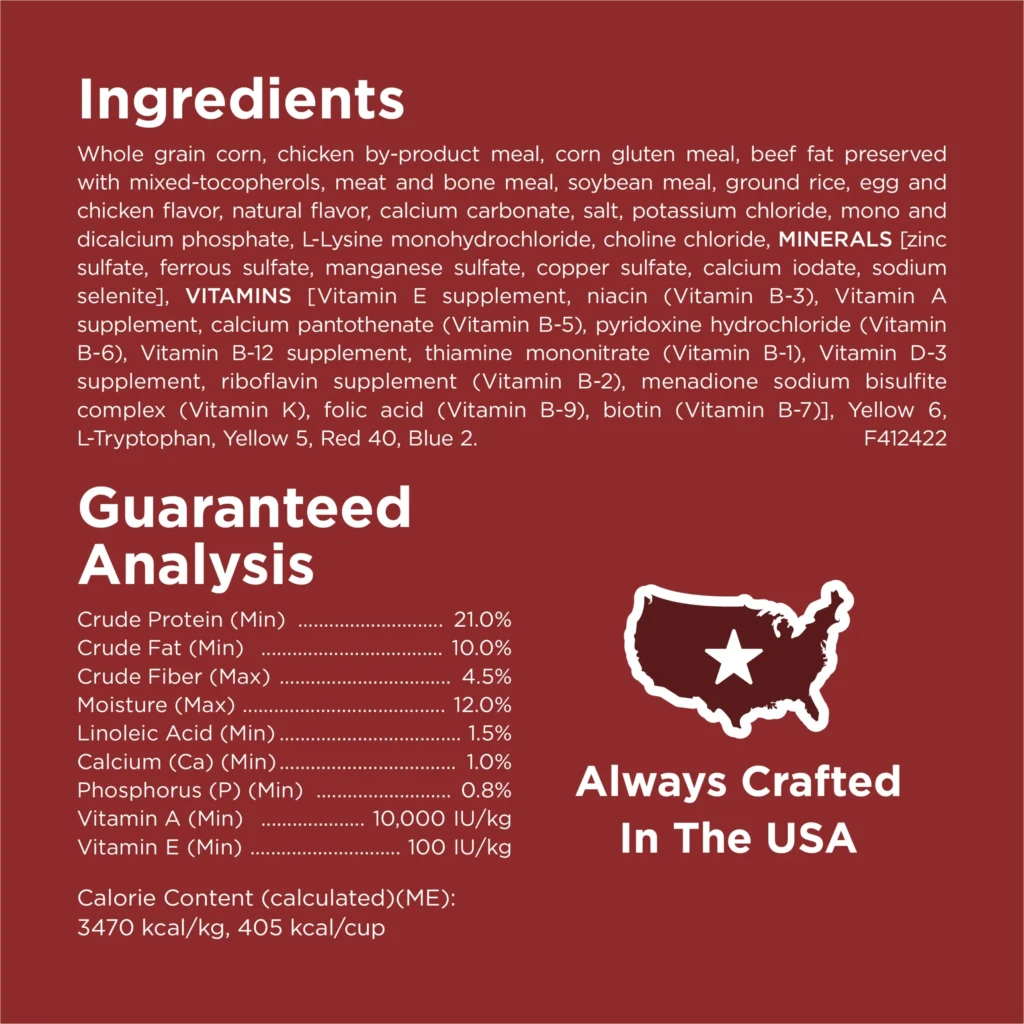
Understanding the Terms
Before comparing nutrients, it helps to understand how these values are listed on cat food labels. Two common terms you’ll see are “as fed” and “dry matter basis,” and they play an important role in comparing wet and dry foods accurately.
As Fed
The nutrient value exactly as it appears on the label, including all moisture. This is how manufacturers are required to list nutrients.
Dry Matter Basis (DMB)
Dry Matter Basis (DMB) is mainly a comparison tool to show how moisture affects nutrient percentages. Once you understand this, you can compare foods confidently without doing the math each time.
.
Crude Protein
Crude protein shows how much protein is in the food, which cats need for muscle health, energy, and essential amino acids. Since cats are obligate carnivores, protein is crucial, though the percentage doesn’t reflect its quality or digestibility.
Crude protein represents the total amount of nitrogen-based compounds in cat food and is essential for healthy growth, muscle development, and energy especially for kittens.
To compare protein levels between different types of food (like dry vs. wet), AAFCO recommends converting the protein value from the “as fed” label to a dry matter basis (DMB).
Method to calculate:
1: Determine Dry Matter %
Dry Matter % = 100%−Moisture %
2: Convert Crude Protein to Dry Matter Basis
Crude Protein (DM%) = Crude Protein% (As Fed)/Dry Matter % ×100
Result: The final value represents the crude protein percentage on a dry matter basis.
Example: Comparing Dry and Wet Food
Dry Food :
37% Crude Protein, 12% Moisture.
Dry Matter: 100 – 12 = 88%
Protein (DM Basis): (37 / 88) * 100 = 42%.
Wet Food :
12% Crude Protein, 78% Moisture.
Dry Matter: 100 – 78 = 22%
Protein (DM Basis): (12 / 22) * 100 = 54.5%
Nutritional Quality vs Quantity.
While Guaranteed Analysis shows how much protein is present, it doesn’t indicate protein quality. Factors like source, digestibility, and essential amino acids aren’t reflected, so it’s important to consider the ingredient list and overall formulation too.
Crude Fat
Crude fat provides a concentrated source of energy and essential fatty acids that support skin, coat, and overall health. Both too little and too much fat can be unsuitable depending on a cat’s needs. Fat levels are best understood in balance with protein and overall calorie intake
Method to calculate:
To calculate crude fat in cat food for AAFCO comparison, you need the Guaranteed Analysis (GA) percentages (Crude Fat %, Moisture %) from the label and apply the Dry Matter Basis (DMB) formula.
1.Determine Dry Matter %
Dry Matter % = 100% − Moisture %
2. Convert Crude Fat to DMB
Crude Fat DMB = (Crude Fat % / Dry Matter %) * 100.
Result:The final value represents the crude fat percentage on a dry matter basis.
Example: Wet Food and Dry Food.
Dry Food :
15% Crude Fat, 10% Moisture.
Dry Matter: 100 − 10 = 90%
Fat (DM Basis):(15 ÷ 90) × 100 = 16.7%
Wet Food :
5% Crude Fat, 78% Moisture.
Dry Matter: 100 − 78 = 22%
Fat (DM Basis):(5 ÷ 22) × 100 = 22.7%
Note: AAFCO requires minimum dry-matter fat for adult cats. Wet foods only appear lower because of moisture; on a dry-matter basis they meet requirement
Crude fiber
Crude fiber supports digestion by adding bulk, but cats need very little. Small amounts can help gut health, while too much may reduce nutrient absorption.
Method to Calculate
1:Determine Dry Matter %
Dry Matter % = 100% − Moisture %
2: Convert Crude Fiber to DMB
Dry Matter % = (“As Fed” Nutrient % ÷ (100% – Moisture %)) × 100
Example: Dry food contains 3% Crude Fiber,10% Moisture (As Fed)
Dry Matter Fiber % = (3 ÷ (100 – 10)) × 100 = 3.3%
Moisture
Moisture is the water content in food. Since cats have a low thirst drive, higher-moisture foods help with hydration, which is why wet food is often beneficial. Cats don’t naturally drink much water and in the wild they stay hydrated by eating prey. For this reason, wet food (about 70–75% moisture) supports hydration, while dry food (around 10% moisture) requires cats to drink more on their own.
How to Interpret These Values Together?
Guaranteed Analysis works best when viewed as a group of indicators rather than individual numbers. For cats, protein and moisture are usually the most important, as cats are obligate carnivores with low thirst drive. Fat supports energy and nutrient absorption, while fiber should typically remain moderate. No single value determines whether a food is good or bad.It’s the overall balance, along with life stage and lifestyle, that matters.
AAFCO guidelines for cats and kittens
The Association of American Feed Control Officials (AAFCO) provides nutritional standards to ensure that cat food is complete, balanced, and appropriate for each life stage. The tables below summarize the key AAFCO nutrient guidelines for dry and wet cat foods formulated for adult maintenance, as well as for kittens and reproducing females.
Dry Food
|
| Kitten/Growth and Reproduction Nutrient |
Crude Protein | Min 26% | Min 30% |
Crude Fat | Min 9% | Min 9% |
Crude Fibre | Not specified by AAFCO | Not specified by AAFCO |
Moisture | Max 10% | Max 10% |
Ash | Not specified by AAFCO | Not specified by AAFCO |
Wet Food
Nutrients | Adult Maintenance/Growth |
Crude Protein | min. 9% |
Crude Fat | min. 7% |
Crude Fibre | max. 1% |
Moisture | max. 75% |
Ash | max. 2% |
LIMITATIONS of Guaranteed Analysis
Guaranteed Analysis does not reflect ingredient quality, digestibility, bioavailability, sourcing, or how an individual cat may respond to a food. It also does not show processing methods or formulation intent. For this reason, Guaranteed Analysis should be used as a starting point, alongside the ingredient list, feeding guidelines, and life-stage suitability.
Conclusion: Make Sense of the Guaranteed Analysis
Guaranteed Analysis isn’t about chasing the highest numbers . It’s about understanding what those values mean in context. When paired with AAFCO standards, ingredient lists, feeding guidelines, and your cat’s life stage, it becomes a useful tool for evaluating food. Wet and dry foods can both be healthy choices when they’re complete, balanced, and suited to your cat’s needs. Once you understand how to read the label, choosing cat food becomes much simpler and more confident.
Also do check out our step by step guide on reading the entire cat food label, from ingredients to calorie content, be sure to read our full article on “How to read a cat food label.”