
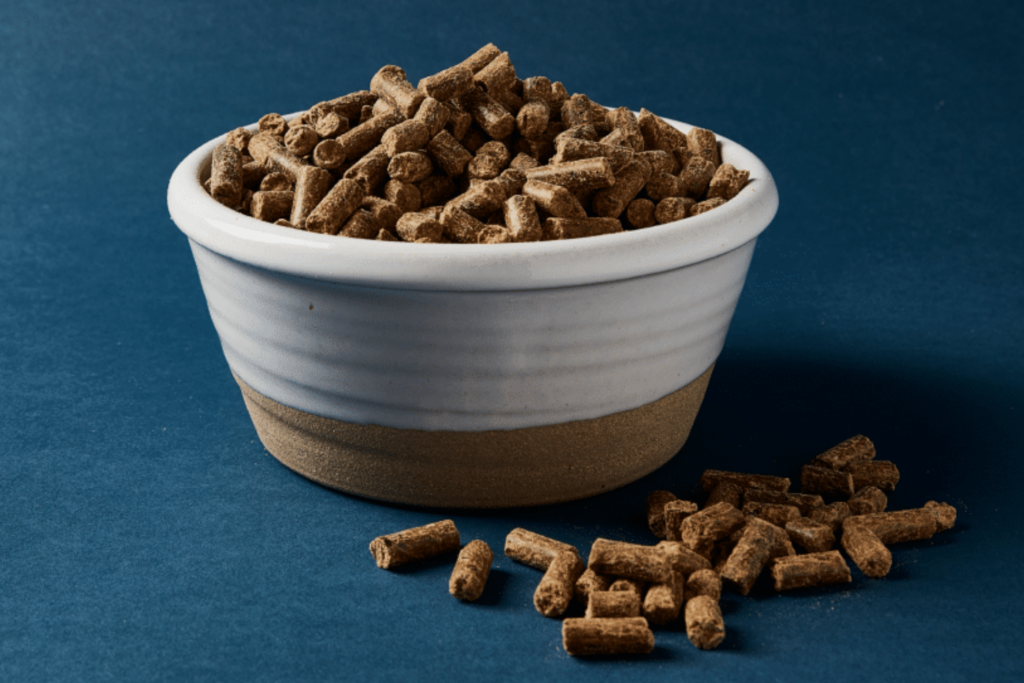
Cold-pressed cat food is one of the newer, more natural ways to make dry food for cats. Instead of being cooked at super high temperatures like regular kibble, it’s made using lower temperatures (typically below 40°C) and gentle pressure. That means more of the nutrients, flavors, and even the smell of the ingredients stay intact.
You can think of it as sitting somewhere between raw feeding and traditional kibble. It keeps more of the natural goodness from the ingredients but still gives you the convenience of a dry, shelf-stable food. Pretty neat, right? Let’s take a look at what actually goes on behind the scenes to make it.
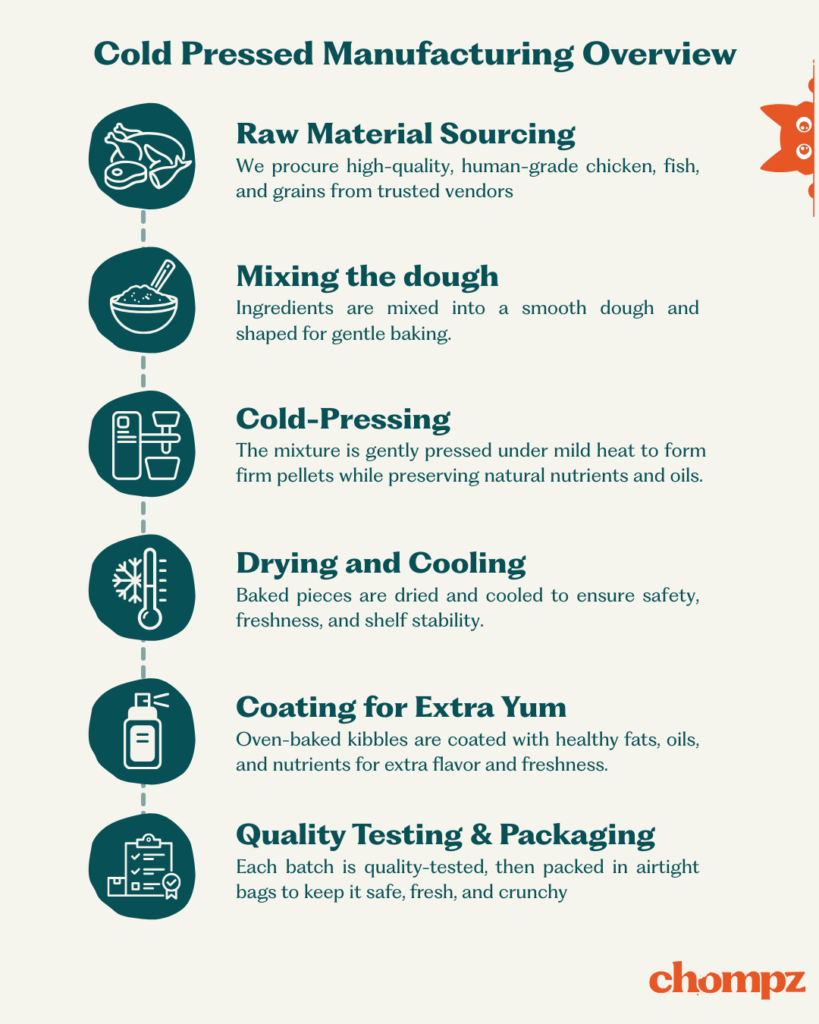
Step-by-Step: How Cold-Pressed Cat Food Is Made
1. Ingredient Preparation
It starts with high-quality ingredients : meats, grains, vegetables, healthy fats, and essential vitamins and minerals. Each is carefully selected, cleaned, and ground to create a fine, even mix, much like preparing fresh ingredients for a balanced homemade meal.
2. Mixing and Hydration
The dry ingredients are blended with just the right amount of water or moist components to form a smooth, workable mixture. Similar to mixing dough, this ensures everything binds naturally without relying on high heat or additives.
3. Cold-Pressing
The mixture is then compressed under moderate pressure and mild heat (around 40 °C–65 °C). Think of it as gentle baking, warm enough to form firm pellets, yet cool enough to preserve nutrients, enzymes, and natural oils. Unlike traditional kibble cooked at extreme temperatures, this process keeps more of the food’s natural goodness intact.
4. Drying and Curing
Next, the pellets are slowly dried at low temperatures to remove moisture while maintaining flavor and nutrients. Similar to air-drying or dehydrating human food, this step prevents spoilage and gives the food its firm, nutrient-rich texture.
5. Quality Testing and Packaging
Every batch undergoes nutrient, moisture, and safety checks, just like quality control in human food production. Once approved, it’s sealed in airtight, moisture-resistant packaging to lock in freshness, flavor, and safety until it reaches your cat’s bowl.
Why Are Pet Parents Talking About Cold-Pressed Food?
Nutrient-rich: The gentle, low-temperature process helps preserve more vitamins, healthy fats, and natural flavors.
Tasty and digestible: Cats often find cold-pressed food more aromatic and palatable, and its dense texture supports easier digestion.
Quality and freshness: Because it’s made with minimal processing, it may have a shorter shelf life and a slightly higher cost than traditional kibble.
Trusted sourcing: The overall safety and nutritional quality depend on the manufacturer’s standards and ingredient selection.
How to Transition to Cold-Pressed Food
When introducing your dog to a new diet, it’s important to make the change gradually. A slow transition helps avoid digestive upset and allows your dog to adjust to the new texture and flavor. Here’s a simple 7-day plan to guide you:
- Days 1–2: Offer small portions of the cold-pressed food as treats throughout the day to help your dog get used to the taste and aroma
. - Days 3–5: Replace one of your dog’s daily meals with the cold-pressed food while keeping the other meal as their current food.
- Day 6 onward: Once your dog is comfortable, switch fully to the cold-pressed food.
Cold-Pressed vs Extruded vs Baked
Choosing the right food for your cat can feel like a bit of a puzzle, especially with so many types out there. Each method of making cat food changes how it tastes, how easy it is to digest, and how much nutrition stays in every bite. To make things simpler, here’s a quick, easy-to-understand comparison of the three most popular types : Extruded,baked , and cold-pressed cat food.
Features | Oven Baked | Extruded(Kibble) | Cold-Pressed |
Cooking Temperature | Gently baked at 150–200 °C (300–400 °F) to preserve flavor and nutrients. | Cooked under high heat and pressure, usually around 120–150 °C (250–300 °F). | Made at low temperatures below 70 °C (158 °F), then dried slowly to protect nutrients. |
How It’s Made | Ingredients are mixed into dough, shaped, slowly baked, tested, coated, and sealed for freshness. | The mix is cooked under high pressure, then extruded, dried, and coated with flavor. | Ingredients are gently mixed and pressed without extreme heat for a more natural finish. |
Texture | Dense and crunchy, similar to homemade biscuits. | Light and crispy, with that familiar airy kibble texture | Soft and crumbly, closer to a natural, less processed feel. |
Digestibility | Easy on the stomach, great for sensitive cats. | Good overall, though some cats may experience mild bloating. | Highly digestible, thanks to gentle processing. |
Costing | Higher : takes longer to bake and uses better-quality ingredients. | Most affordable : mass production makes it cost-effective. | Generally the most expensive : the specialized, low-heat process costs more to produce. |
Our Final Thoughts:
Cold-pressed cat food is a wonderful choice for pet parents who want a more natural and minimally processed diet without giving up convenience. The gentle way it’s made helps preserve nutrients and flavor, creating a meal that’s wholesome, tasty, and satisfying for your cat.
When choosing any type of cat food ,it’s always worth paying attention to what goes into it. Look for recipes made with high-quality proteins, produced under strict quality standards, and that meet AAFCO or FEDIAF nutritional guidelines.
In the end, the best food is the one your cat enjoys and feels great on, because nothing matters more than a happy, healthy cat.