
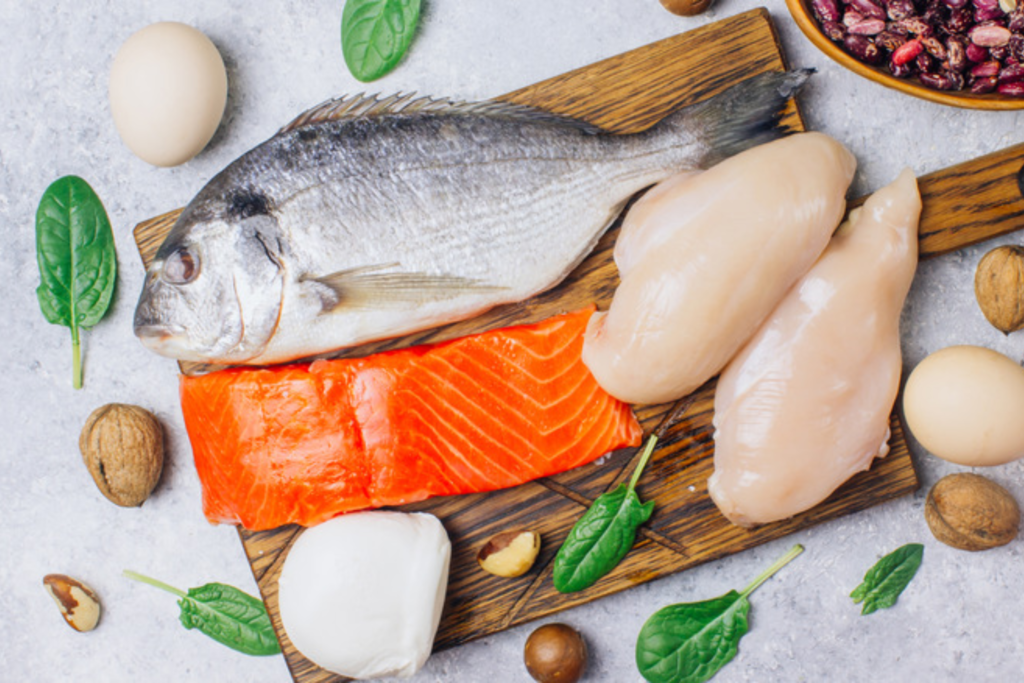
You’ve probably seen the words “chicken meal” or “fish meal” on your cat’s food bag and thought…Wait, why is there meal in my cat’s food?”
Fair question. It sounds like something we’d sprinkle on breakfast cereal but not feed our cats. But here’s the thing: “meal” in pet food isn’t a filler or mystery powder . It’s actually one of the richest protein sources cats can get.
Let’s scoop into the bowl (again!) and find out what chicken and fish meal really are, how they’re made, and why your cat’s body secretly loves them.
What on Earth Is ‘Animal Meal’?
Think of animal meal as a concentrated source of protein. Imagine taking chicken or fish, cooking away all the water and fat, and then grinding what is left, the pure protein, minerals, and nutrients, into a fine, dry powder. That is what a chicken meal or fish meal really is.
Sounds weird, right? But it’s actually quite clever.
Fresh chicken is about 70% water, while chicken meal has almost none. So gram-for-gram, chicken meal can have up to 3x more protein than raw chicken! That’s why pet food makers love it . They pack more nutrition into a smaller scoop.
Chicken Meal vs Fish Meal: What’s the Difference?
| Ingredient | What It’s Made Of ? | Why It’s Awesome for Cats ? |
| Chicken Meal | Rendered, dried chicken (meat, skin, sometimes bone — but no feathers or feet) | Super high protein for strong muscles, taurine, and essential amino acids. |
| Fish Meal | Whole fish or fish trimmings, dried and ground | Loaded with omega-3s for a silky coat, healthy heart, and sharp brain |
How It’s Made? (and Why It’s Not Gross)
Let’s be honest , the word “rendering” doesn’t sound very appetizing. But the process is actually quite simple and sanitary. Here’s how it works:
-
- Cooking: Chicken or fish parts are gently cooked to remove moisture and fat.
- Drying: The cooked solids are carefully dried to eliminate any remaining water.
- Grinding: The dried material is ground into a fine powder known as meal.
- Nutrient Density: This meal is rich in protein, minerals, and natural flavor.
- Preservation: Because it’s dried, it becomes shelf stable, easy to store, and less likely to spoil than raw meat.
- Cooking: Chicken or fish parts are gently cooked to remove moisture and fat.
The Truth Bomb: ‘Meal’ ≠ ‘By-Product’
This is where people get confused.
“Isn’t chicken meal just another name for by-products?” -Nope. Not at all.
| Chicken Meal | Clean, cooked, and ground chicken parts (mostly meat and skin). |
| Chicken By-Products | Organs, feet, feathers, necks,parts cats would eat in the wild, but not all are nutritionally equal. |
| Animal Meal (vague) | Could be anything from any animal. (That’s a major red flag) |
How to Read the Label Like a Pro?
Here’s your cheat sheet:
| Label Says | What It Means | Good or Bad? |
| Chicken Meal or Fish Meal (Species mentioned) |
These are made from the cooked, dried, and ground parts of chicken and fish | Reliable choice as source is mentioned |
| Meat and Bone Meal | Mixed, unknown sources | Practice caution as undefined nature can mean lower quality |
| Animal Meal | Vague term that doesn’t specify the animal source. Can include low-quality or mixed ingredients. |
Lacks clarity; choose one with even more specific ingredients |
If the first few ingredients are chicken meal, salmon meal, or whitefish meal, you’re probably looking at a solid formula.
Our Takeaway
Chicken and fish meal aren’t mystery ingredients.They’re concentrated, high-quality protein sources that help keep your cat strong and healthy. They’re not fillers; they’re protein powerhouses. The key is choosing meals from named, trusted sources like chicken meal or fish meal.
When that’s the case, you can feel confident your cat is getting the nutrients they need to zoom, purr, and nap like royalty. If their coat is shiny and energy is high, you’re on the right track.
In the next one, we will explore what ‘Human-grade meat’ really means and whether your cat needs it or not.